Nonclinical Research Services
Whether for a small molecule, biologic, or advanced therapeutic modalities, we generate comprehensive, regulatory-ready nonclinical data you need to support regulatory submissions, first-in-human planning, and critical early development decisions. With built-in expertise in bioanalysis, pathology, regulatory affairs, and early clinical research, we help you reduce development risk, maintain program continuity, and move confidently toward clinical readiness.
Connect with our seasoned experts for tailored advice on your preclinical research needs.
Proven Nonclinical Expertise
Nonclinical research is where early assumptions about safety, exposure, dose range, route of administration, and model relevance get tested. We will help you generate data that can be interpreted, defended, and used to move your program forward.
We conduct over 700 nonclinical studies annually across a broad range of therapeutic areas and modalities. With four nonclinical facilities, integrated pathology and bioanalytical laboratories, experienced study directors, and dedicated program managers, we provide the scientific depth and operational scale needed to support everything from focused pharmacology studies to complex global IND/NDA-enabling programs.
Working as an extension of your team, we help you:- Reduce development risk through scientifically designed studies
- Generate regulatory-ready GLP and non-GLP data
- Select appropriate species, models, and endpoints
- Connect toxicology, pathology, PK/PD, and bioanalytical findings
- Identify translational biomarkers that support clinical development
- Prepare for IND, CTA, NDA, and BLA submissions
- Accelerate the transition from nonclinical research to first-in-human studies
PURPOSE-BUILT
FACILITIES
SAFETY STUDIES
COMPLETED ANNUALLY
TEAM MEMBERS
Nonclinical Research Capabilities
We design nonclinical programs around the unique characteristics of your molecule, therapeutic modality, and development strategy—whether it’s for a single study or an end-to-end development program―to advance your drug candidates from discovery into early clinical development.
Study Types
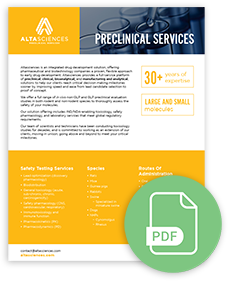
Working with a wide range of pharmaceutical companies from across the globe, our team of scientists and technicians has been conducting nonclinical research for over 30 years. Our safety testing services include the following core study types:
-
 LEAD OPTIMIZATION STUDIES
 -
 DOSE-RANGE FINDING STUDIES
 -
 PRECLINICAL PHARMACOLOGY STUDIES
 -
 PHARMACOKINETICS/ PHARMACODYNAMICS STUDIES
 -
 PIVOTAL TOXICOLOGY STUDIES (acute, sub-chronic, chronic, carcinogenicity)
 -
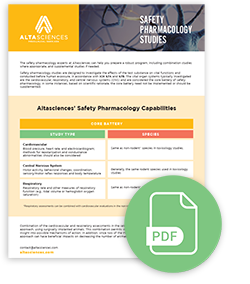
 SAFETY PHARMACOLOGY STUDIES (CNS, cardiovascular, respiratory)
 -
 IMMUNOTOXICOLOGY/ IMMUNOLOGY STUDIES
Nonclinical CRO Services Support
In addition, we have an extensive range of tailored CRO services to support your nonclinical studies.
- Formulation development
- Analytical chemistry
- Bioanalysis
- Translational biomarker support
- Biodistribution
- PK/TK data analysis
- Immunohistochemistry
- Specialized necropsies
- Anatomic pathology
- Clinical pathology
- SEND-compliant datasets
- Regulatory reporting and study archiving
Because our scientific teams remain connected throughout development, knowledge gained during exploratory studies can inform later-stage toxicology, pathology, bioanalysis, and clinical planning. This knowledge continuity reduces duplication, strengthens scientific interpretation, and supports faster decision-making throughout early development.
Specialized Models and Modalities
Emerging therapeutic modalities often require nonclinical strategies that extend beyond conventional GLP toxicology study designs. At Altasciences, we design and conduct specialized nonclinical programs that support the unique scientific and regulatory requirements of biologics, monoclonal antibodies, antibody-drug conjugates (ADCs), cell and gene therapies, oligonucleotides, RNA therapeutics, ophthalmic drugs, dermatology products, central nervous system (CNS) therapies, and other advanced therapeutic platforms.
Our scientists work closely with you to select the most appropriate animal models, study designs, and endpoints based on your drug's mechanism of action, target biology, route of administration, and regulatory strategy. Depending on your program requirements, studies may incorporate specialized assessments such as:
- Biodistribution
- Vector persistence and shedding
- Immunogenicity
- Immunotoxicology
- Local tolerance
- Pharmacodynamic biomarkers
- Ophthalmic or neurological evaluations
- Advanced imaging
- Tissue-specific pathology
Species and Routes of Administration
Nonclinical studies require models and dosing strategies that align with the scientific questions being addressed. Species selection, route of administration, sampling strategy, and study duration all play a critical role in generating meaningful data to inform safety, exposure, tolerability, and clinical development decisions.
We work across a broad range of species and routes of administration, tailoring study designs to your molecule, therapeutic indication, and regulatory objectives.
Rodent and Non-Rodent Models
Animal model selection shapes the quality and usefulness of nonclinical data. Our recommendations for species selection are guided by the biology of your molecule, pharmacologic relevance, safety assessment needs, and the intended clinical pathway.
We conduct nonclinical studies in:
- Mice
- Rats
- Rabbits
- Guinea pigs
- Swine
- Miniature swine
- Dogs
- Nonhuman primates (Cynomolgus, Rhesus, others open request)
Each species offers distinct scientific advantages depending on the therapeutic modality, mechanism of action, and stage of development. Our scientists work closely with you to determine when standard models are appropriate and when specialized species, such as minipigs or nonhuman primates, provide greater translational value. With this flexibility, we ensure that your study designs are driven by science rather than operational limitations.
Routes of Administration
Selecting the appropriate route of administration extends beyond dosing convenience. The route of administration influences drug exposure, absorption, local tolerability, formulation strategy, tissue distribution, toxicokinetics, and ultimately how well nonclinical findings translate into clinical development.
Our multidisciplinary teams work together to design studies using administration routes that closely reflect your intended clinical use while considering regulatory expectations, molecule characteristics, and study objectives. This integrated planning helps generate more clinically relevant data while reducing the need for additional bridging studies later in development.
Dosing routes include:
- Oral
- Parental
- Infusion
- Ocular
- Dermal
- Implant
- Intravaginal and intrapenile
- Rectal
Where appropriate, studies can incorporate specialized dosing techniques, formulation strategies, optimized sampling schedules, and local tolerability assessments to better reflect intended clinical use.
Nonclinical Facilities and Laboratories
Nonclinical research depends on more than study design alone. Facilities, laboratory systems, animal care environments, and operational controls all affect how consistently a program can be executed and interpreted.
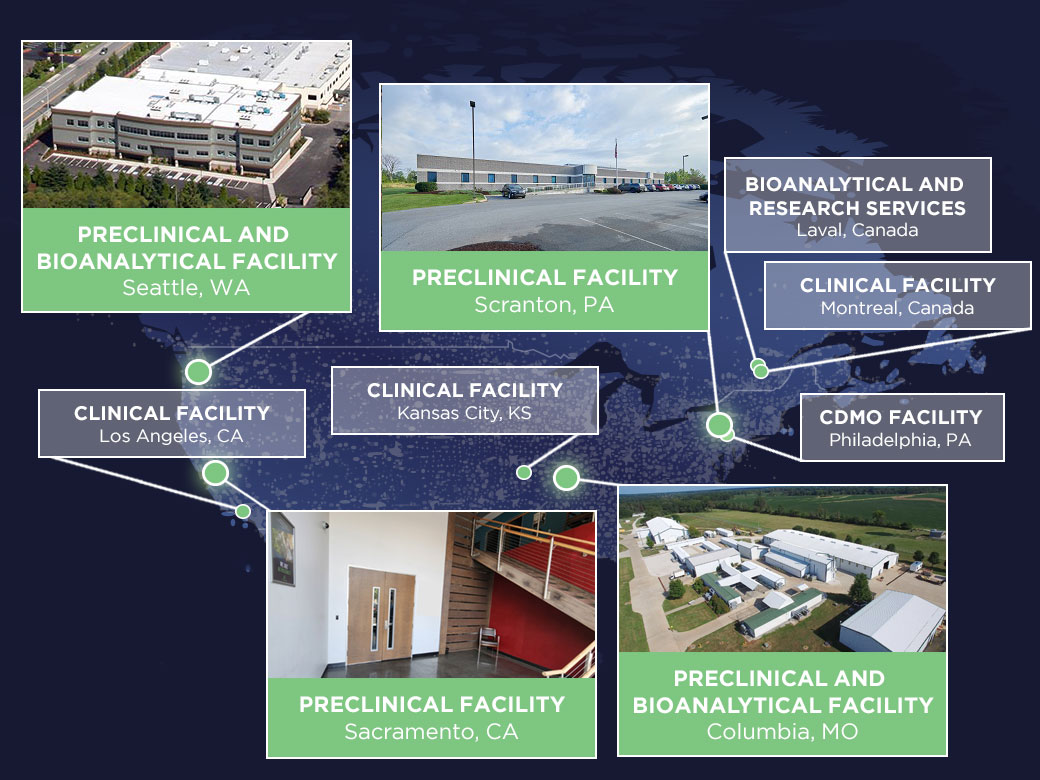
Our four nonclinical research facilities across North America give you the capacity and operational consistency to keep your programs moving forward.
Purpose-Built Research Environments
Our facilities are designed to accommodate a wide range of requirements while maintaining controlled workflows and consistent study oversight, with over 280 custom-designed animal rooms. All our facilities are AAALAC-accredited and USDA-certified.
Capabilities at our nonclinical sites include:
- Rodent and non-rodent research areas
- Specialized housing and procedure rooms
- Dose formulation and administration areas
- Clinical pathology and sample processing spaces
- Necropsy and anatomic pathology resources
- Bioanalytical laboratory access
- Study rooms designed for varying durations and complexity
Bioanalysis That Strengthens Scientific Interpretation
Rather than giving you isolated datasets, we help you understand how drug exposure relates to biological activity, safety findings, target engagement, and therapeutic response by integrating bioanalysis directly into your nonclinical development. This allows pharmacokinetic, toxicokinetic, biomarker, and exposure data to be generated within the same scientific framework as toxicology and pathology.
This integrated interpretation is particularly valuable now that regulators increasingly expect sponsors to demonstrate not only that your therapy is safe, but also that your nonclinical data supports the proposed clinical strategy.
Animal Welfare and Ethical Oversight
Animal welfare is a fundamental part of scientific excellence at Altasciences. Our staff are extensively trained in laboratory animal care, with a strong focus on humane handling, environmental enrichment, and species-specific husbandry practices that support both animal well-being and high-quality scientific outcomes. Every study is conducted in accordance with applicable regulatory requirements and ethical standards, with compassion and respect guiding every aspect of animal care.
Study teams work closely with veterinary, pathology, and scientific experts to ensure that each animal model, study design, endpoint, procedure, and monitoring plan is scientifically justified and aligned with regulatory expectations. This commitment supports both ethical research standards, as well as the reliability of the data your program depends on.
Related Services and Development Capabilities
Study design, species selection, pathology interpretation, bioanalysis, formulation, and regulatory planning all influence how confidently a program can move toward IND submission and first-in-human studies.
Our integrated model connects nonclinical research with complementary scientific and operational capabilities across early development, helping you carry study insights forward into the next milestone.
Explore our integrated services:
- Bioanalysis
- Clinical Research
- Drug Product Formulation
- Manufacturing
- PK/PD Studies
- Safety Pharmacology
- Project and Program Management
- Regulatory Affairs
These connected capabilities allow you to begin with a focused nonclinical question or build a broader IND-enabling strategy that links nonclinical data, bioanalysis, regulatory planning, and early clinical readiness.
The Acceleration Platform
Nonclinical research is available on its own or as part of the Acceleration Platform, Altasciences' integrated framework for compressing nonclinical-to-clinical development timelines through parallel execution, with the potential to reduce overall timelines by up to 40% and reach clinical proof-of-concept in as little as 18 months.
Related Resources
Frequently Asked Questions About Nonclinical Research Services
How do I determine the right nonclinical strategy for a program?
Every program has different scientific and regulatory requirements. Altasciences works with sponsors to build a study plan based on their molecule, therapeutic area, development stage, and regulatory objectives, helping identify potential challenges early before they affect timelines.
How do I choose the appropriate species for preclinical studies?
Species selection depends on scientific relevance, pharmacologic activity, metabolism, route of administration, safety assessment needs, and regulatory expectations. The selected species should provide data that helps characterize safety, exposure, and translational relevance for the intended clinical program.
In some cases, the most common model is not the most useful one. Species selection should match the molecule and the question the study needs to answer.
How early should I start planning IND-enabling studies?
Sponsors should begin planning IND-enabling studies before exploratory work is complete. Early planning helps align study design, dose strategy, bioanalysis, pathology, formulation, and regulatory expectations before timelines become compressed.
This also gives teams time to identify data gaps, refine endpoints, and coordinate the studies needed for first-in-human readiness.
Why is continuity between nonclinical and clinical development important?
Preclinical findings influence clinical dose selection, safety monitoring, escalation strategy, sampling schedules, and early biomarker planning. Toxicology, PK/PD, pathology, and bioanalytical data all help shape the first human study.
When preclinical and clinical teams stay connected, sponsors can use preclinical findings more effectively during clinical planning and regulatory discussions.
Can Altasciences conduct both standalone preclinical studies and full IND-enabling programs?
Yes. Sponsors can work with Altasciences for focused standalone studies or broader IND-enabling programs. A standalone study may answer a specific toxicology, pharmacology, PK/PD, or pathology question. A larger program may combine multiple disciplines, study types, and regulatory planning activities.
This flexibility allows sponsors to choose the level of involvement that fits their program stage, internal capabilities, and development goals.
What types of molecules can Altasciences work with in preclinical research?
Altasciences works with small molecules, biologics, and advanced therapeutic modalities. Study designs may be adapted based on molecule characteristics, intended route of administration, target indication, and regulatory pathway.
Specialized modalities may require tailored endpoints, bioanalytical strategies, species selection, biodistribution analysis, immunogenicity assessment, or local tolerability evaluation.
What role does pathology play in preclinical research?
Pathology helps interpret tissue-level and clinical pathology findings in the context of dose, exposure, study observations, and safety outcomes. It can help identify target-organ effects, assess reversibility, and clarify whether findings may affect clinical planning.
Strong pathology interpretation turns study observations into useful development insight.
How can preclinical study design reduce later development problems?
Preclinical study design cannot eliminate uncertainty, but it can reduce avoidable gaps. Choosing appropriate models, endpoints, dose levels, sampling schedules, and analytical methods helps generate data that is more useful for regulatory review and clinical planning.
A well-designed preclinical program answers the current scientific question while preparing for subsequent development decisions.
How do regulatory requirements influence nonclinical study design?
Regulatory expectations vary based on factors such as molecule type, indication, route of administration, and planned clinical studies. Designing your nonclinical program with these requirements in mind helps generate data that supports regulatory submissions while reducing the need for additional studies later.
What should I look for in a nonclinical CRO?
Beyond capacity, look for scientific expertise, study quality, regulatory experience, and the ability to design programs that generate meaningful, review-ready data. The right CRO should help you make informed development decisions, not simply execute studies.