Altasciences Continues to Expand North American Bioanalytical Footprint
Laval, Québec, August 11, 2026 — Altasciences today announced a major expansion of its North American bioanalytical laboratory footprint, reinforcing its commitment to helping sponsors accelerate drug development through increased capacity, advanced automation, and harmonized scientific operations.
The expansion includes a 4,000-square-foot addition to the company’s laboratory in Greater Montréal, which is expected to be fully operational by the end of Q3 2026. The company has also announced a new 13,000-square-foot purpose-built laboratory in Harleysville, Pennsylvania. Construction will proceed in phases, with Phase 1 scheduled for completion in Q1 2027.
These investments significantly increase Altasciences' ability to support the growing demand for late-stage clinical bioanalysis while providing sponsors with greater flexibility, scalability, and operational resilience.
Designed to support increasingly complex development programs, the expanded laboratories will result in increased capacity to conduct larger studies and higher sample volumes while incorporating state-of-the-art instrumentation and advanced laboratory automation for pharmacokinetic and pharmacodynamic assay method development, validation, and sample analysis across the clinical phases drug development. The additional capacity and streamlined workflows will reduce turnaround times, enabling sponsors to obtain critical bioanalytical data faster, make informed development decisions sooner, and keep clinical programs moving forward.
"Our clients are bringing increasingly complex molecules into development, and that is driving unprecedented demand for sophisticated bioanalytical support," said Lynne Le Sauteur, Vice President, Laboratory Sciences, Altasciences. "We're investing ahead of that demand by expanding capacity where sponsors need it most and deploying state-of-the-art instrumentation and automation that enhances speed without compromising quality.”
The expansion project strengthens Altasciences’ broader North American bioanalytical network, which includes established laboratories in Greater Montréal (Quebec), Seattle (Washington), and Columbia (Missouri). Together, these locations provide sponsors with bioanalytical expertise and capacity across the drug development continuum, supporting programs from nonclinical research through late-stage clinical development while helping de-risk global trials through built-in flexibility, scalability, and business continuity.
“Because every Altasciences laboratory is built on the same harmonized scientific platform, sponsors gain the flexibility to scale programs across locations while receiving the consistent, high-quality data they rely on to make critical development decisions," stated Lynne Le Sauteur.
All Altasciences laboratories are designed and built from the ground up using the same validated quality systems, scientific workflows, instrumentation platforms, and operational processes. This network-wide harmonization enables sponsors to leverage capacity across locations, transition work seamlessly between laboratories, and maintain complete confidence in the integrity and consistency of their bioanalytical data.
"This investment is about far more than expanding laboratory space," said Robert Sabelli, Co-Chief Operating Officer, Altasciences. "We're building one of the industry's most integrated and scalable bioanalytical networks. As clinical programs become larger, more complex, and increasingly global, sponsors need a partner that can rapidly scale capacity while delivering consistent scientific excellence across every location. That's exactly what we're delivering."
These investments reinforce Altasciences’ integrated drug development platform and underscore the company's commitment to investing in people, facilities, technologies, automation, and the scientific expertise needed to help clients accelerate drug development with confidence.
About Altasciences
Altasciences is a drug development organization dedicated to safely accelerating early-phase development for biotech, biopharmaceutical, and pharmaceutical companies. By combining the scale and expertise of a large CRO/CDMO with the flexibility and personalized approach of a mid-size partner, Altasciences delivers unified solutions across nonclinical, clinical, bioanalytical, and formulation and manufacturing services. Through intentional integration and true collaboration, the company removes barriers from lead candidate selection to clinical proof-of-concept—helping sponsors save time, reduce complexity, and make confident, data-driven decisions that enable earlier returns on investment. Guided by over 30 years of experience and a commitment to quality, integrity, and partnership, Altasciences enables clients to reach critical milestones faster and with greater confidence. To learn more about Altasciences, visit altasciences.com.
Julie-Ann Cabana
Altasciences
media@altasciences.com
How Saying "Yes" Changed My Career in Drug Development by Maatangi Sachchithanandam
When I reflect on my career journey, three lessons stand out: opportunities are only missed when they are not taken, discomfort is often where growth begins, and not knowing exactly what you want can sometimes open the door to what comes next.
Altasciences Completes Expansion of Research and Development Laboratory in Harleysville, Pennsylvania
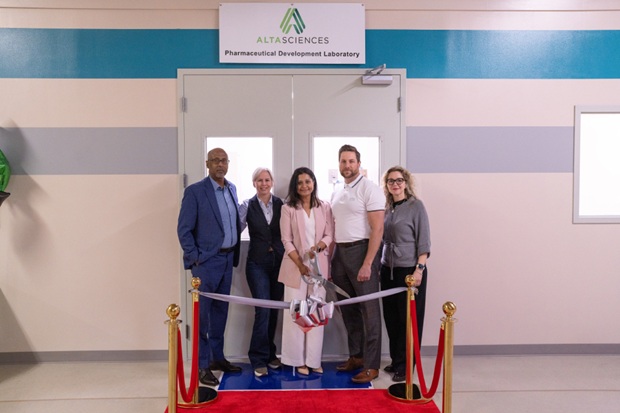
Laval, Québec, August 4, 2026 — Altasciences is excited to share it has expanded the R&D laboratory at its drug product formulation and manufacturing services facility in Harleysville, Pennsylvania, adding approximately 768 square feet of new laboratory space.
The expansion brings together formulation development and analytical testing within a single laboratory. This integrated setup is designed to accelerate decision-making, streamline workflows, and strengthen collaboration across scientific disciplines.
“With this expansion, we are strengthening our focus on early-stage integration, bringing our CDMO capabilities to clients earlier in the drug development journey,” said Anuji Abraham, Senior Director, Pharmaceutical Development, CDMO Services, Altasciences. “This enhances continuity across nonclinical and clinical programs, helping clients navigate key development milestones more efficiently and effectively.”
The enhanced laboratory supports phase-appropriate, target product profile (TPP)-driven formulation screening, tailored to both therapeutic areas and routes of administration while remaining agnostic to both. Capabilities include formulation development for small molecules, peptides, and complex modalities, as well as non-GLP and GLP toxicology samples for nonclinical studies.
Advanced screening models and Integrated analytical testing support nonclinical and clinical readiness, in addition to real-time formulation decisions. By operating in a non-GLP R&D environment, clients will gain flexibility to design and optimize their products before transitioning into regulated studies.
“This expansion is not just about building additional space,” said Robert Sabelli, Co-Chief Operating Officer, Altasciences. “By continuing to invest in our team, we are growing our scientific talent and connecting our capabilities earlier in the development cycle to better support our clients—and ultimately, the patients they serve.”
About Altasciences
Altasciences is a drug development organization dedicated to safely accelerating early-phase development for biotech, biopharmaceutical, and pharmaceutical companies. By combining the scale and expertise of a large CRO/CDMO with the flexibility and personalized approach of a mid-size partner, Altasciences delivers unified solutions across nonclinical, clinical, bioanalytical, and formulation and manufacturing services. Through intentional integration and true collaboration, the company removes barriers from lead candidate selection to clinical proof-of-concept—helping sponsors save time, reduce complexity, and make confident, data-driven decisions that enable earlier returns on investment. Guided by over 30 years of experience and a commitment to quality, integrity, and partnership, Altasciences enables clients to reach critical milestones faster and with greater confidence. To learn more about Altasciences, visit altasciences.com.
Julie-Ann Cabana
Altasciences
media@altasciences.com
Flow Cytometry Bioanalysis for Immunomodulation Studies
Harmonizing Adverse Event Criteria to Improve CNS-Related Safety and Abuse Signal Detection in Clinical Trials
5 Strategies to Reduce AI Hallucination in Clinical Research by Seong min Cho
Large language models (LLMs) are increasingly used in clinical research to support tasks such as policy monitoring, data management, protocol review, and scientific writing. These tools can improve efficiency, organize complex information, and support decision-making. However, they also introduce an important risk: AI hallucination.
Beyond the Cycle: The New Era of PCR in Translational Research
For years, Polymerase Chain Reaction (PCR) has been a foundational laboratory technique, valued for its reliability and versatility. But as we move deeper into the era of ultra-personalized genetic medicine, its role has evolved significantly.
Altasciences and Evidence Matters Advance AI-Driven Drug Development With Nonclinical Automation Breakthrough
Laval, Québec, July 7, 2026 — Altasciences, a fully integrated early-phase drug development organization, and Evidence Matters, a pioneer in clinical trial data science, are pleased to announce a successful proof-of-concept (POC) of RegulatoryFlow (“RegFlow”), following the announcement of the companies’ strategic collaboration in August 2025. The POC demonstrated the extension of AI-driven efficiencies from clinical reporting into nonclinical workflows, marking a significant step forward in accelerating drug development timelines.
Building on proven results in clinical reporting, where the collaboration has achieved up to first-draft clinical study reports (CSRs), the teams have now successfully applied similar AI capabilities to nonclinical data through high-quality parsing of raw and SEND datasets in a proof-of-concept. This advancement aligns with the Altasciences Acceleration Platform, designed to fast-track drug development across the early-phase development continuum.
“This milestone reflects the power of integrated thinking in drug development,” said Marie-Hélène Raigneau, CEO of Altasciences. “By extending AI-driven efficiencies from clinical into nonclinical workflows, we are helping sponsors move from first safety assessments to clinical proof-of-concept, faster, accelerating timelines while maintaining scientific integrity.”
The POC revealed strong initial results, including accurate parsing of datasets and the potential to expedite and streamline nonclinical reporting workflows. This represents a first-of-its-kind AI bridge between nonclinical and clinical phases, enabling more efficient development pathways and freeing internal resources to focus on higher-value scientific work.
“The current version of RegFlow is already capable of generating approximately one-third of a typical nonclinical report with high fidelity,” noted Dr. Ofer Avital, MD, Founder and Director of Evidence Matters. “We are ready to deliver the results sections as well as a focused laboratory sciences subsection as the next key milestones.”
Recent platform enhancements, including the latest software release, continue to improve performance in clinical reporting, with early feedback indicating enhanced data mapping and usability. The collaboration continues to evolve to expedite drug development through AI.
“Together with Altasciences, we are redefining what’s possible in integrated development,” said Dr. Avital. “What began as a transformation in clinical reporting is now evolving into a broader framework for accelerating the entire early-phase journey. We believe this approach has the potential to set a new industry standard.”
About Altasciences
Altasciences is an integrated drug development organization offering pharmaceutical and biotechnology companies a proven, flexible approach to nonclinical and clinical pharmacology studies, including formulation, manufacturing, and analytical services. For over 30 years, Altasciences has been partnering with sponsors to help support educated, faster, and more complete early drug development decisions. Altasciences’ integrated, full-service solutions include nonclinical safety testing, clinical pharmacology and proof of concept, bioanalysis, program management, research support, medical writing, biostatistics, clinical monitoring, and data management, all customizable to specific sponsor requirements.
Julie-Ann Cabana
Altasciences
media@altasciences.com
Altasciences Supports Key Development Milestone for Steel Therapeutics’ Lead Therapeutic Candidate, Fizurex™
LAVAL, Québec – June 30, 2026, Altasciences, a leading drug development organization, today announced a significant milestone in the development of Steel Therapeutics, Inc.’s pivotal toxicology study for its lead product candidate, Fizurex™, for the treatment of anal fissures. The successful completion of the study plays a significant role in the advancement of Fizurex™ toward first-in-human trials.
The GLP-compliant study demonstrated a favorable safety profile, which has advanced Steel Therapeutics' plans to submit an Investigational New Drug (IND) application for Fizurex™ to the FDA in Q3 2026.
Fizurex™, a patent-pending, single-use topical wipe, was designed to provide a standardized, accessible treatment option for a painful and often undertreated medical condition. The product builds on years of use through compounding pharmacy prescriptions and is now advancing toward clinical development and regulatory review.
"We are proud to have supported Steel Therapeutics with the generation of the high-quality safety data needed to advance Fizurex™ toward IND submission and first-in-human evaluation," said Steve Mason, Co-Chief Operating Officer at Altasciences. "The successful completion of this pivotal toxicology study demonstrates the value of close collaboration between our scientific teams and highlights Steel Therapeutics' commitment to advancing innovative therapies that address unmet patient needs."
The study was conducted at Altasciences' GLP-compliant nonclinical research facility in Columbia, MO, and leveraged the company's expertise in toxicology, regulatory-supportive safety assessments, and integrated drug development services. The teams at Altasciences and Steel Therapeutics worked closely together to efficiently execute the program and maintain momentum toward key development milestones.
"This milestone brings us one step closer to bringing Fizurex™ to patients," said Matt Stahl, CEO and Founder of Steel Therapeutics. "We thank the Altasciences team for their dedication, expert execution, and scientific acumen in helping us reach this important achievement. This progress positions us well as we prepare for the next phase of development."
Following IND submission, Steel Therapeutics plans to initiate first-in-human clinical studies in 2027.
"Our goal is to help sponsors move promising therapies through development with confidence, efficiency, and speed," added Mason. "We congratulate the Steel Therapeutics team on reaching this important achievement and look forward to seeing the continued progress of the Fizurex™ program."
About Altasciences
Altasciences is a drug development solutions company helping pharmaceutical and biotechnology sponsors quickly move their programs from lead candidate selection to proof-of-concept. Through a flexible, customized approach, Altasciences partners with sponsors to accelerate development timelines, support informed decision-making, and achieve critical value inflection milestones faster. For more than 30 years, Altasciences has provided the expertise, resources, and strategic support needed to advance early-phase drug development efficiently and confidently. Altasciences’ solutions include nonclinical safety testing, clinical pharmacology and proof-of-concept, formulation, manufacturing, and analytical services, bioanalysis, program management, research support, medical writing, biostatistics, clinical monitoring, and data management, all tailored to specific sponsor requirements. To learn more, visit altasciences.com.
Julie-Ann Cabana
Altasciences
media@altasciences.com